
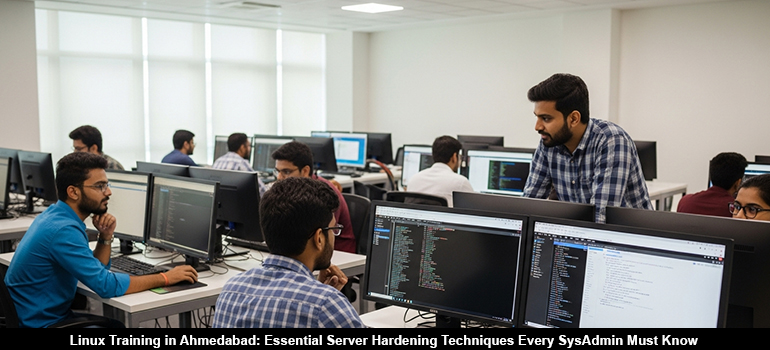
Best Linux Training in Ahmedabad is the starting point for many aspiring IT professionals looking to secure the digital infrastructure of modern businesses. As cyber threats become more sophisticated, a System Administrator’s role shifts from merely keeping servers running to keeping them impenetrable. Server hardening is the critical process of enhancing server security by identifying and fixing vulnerabilities. Without these measures, a default Linux installation can be an easy target for attackers.
Managing User Privileges and Access
Security begins with how you handle user accounts. One of the fundamental lessons emphasized during Linux Training in Ahmedabad is the principle of least privilege. You should never log in as the root user for daily operations. Instead, create specific users and utilize the ‘sudo’ command for administrative tasks. It is also vital to disable empty passwords, lock inactive accounts, and ensure strong password policies are enforced to prevent unauthorized entry.
Securing SSH and Network Ports
The Secure Shell (SSH) is the gateway to your server, making it a prime target for hackers. Comprehensive RHCE RHCSA Classes in Ahmedabad teach students that relying on default configurations is risky. SysAdmins should change the default SSH port from 22 to a non-standard port to stop automated bot attacks. Furthermore, disabling password authentication and strictly using SSH keys adds a robust layer of encryption that is significantly harder to bypass than a standard password.
Firewalls and System Updates
A server without a firewall is like a house without doors. In Red Hat Training Ahmedabad, professionals learn to configure tools like Firewalld or Iptables to filter traffic. This ensures that only necessary connections are allowed while blocking potential threats. Equally important is patch management; regularly updating the kernel and installed software packages fixes known security holes, keeping the system resilient against the latest exploits.
Implementing Advanced Security Tools
Beyond the basics, employing advanced security layers is essential for a hardened environment. Experts at Highsky IT Solutions recommend utilizing SELinux (Security-Enhanced Linux) to enforce mandatory access controls, which restricts programs to just the resources they require. Additionally, installing tools like Fail2Ban helps monitor log files and automatically bans IP addresses that show malicious behavior, such as numerous unsuccessful login attempts.
Server hardening is not a one-time task but a continuous cycle of monitoring and updating. By implementing strict user management, securing SSH, and maintaining firewalls, SysAdmins can build a secure foundation for their infrastructure. For those looking to master these skills and gain industry-recognized certification, Highsky IT Solutions offers the expert guidance essential for IT industry success.
Also Read: – Linux Training Ahmedabad: Why Linux Is the Foundation of the Modern Internet