
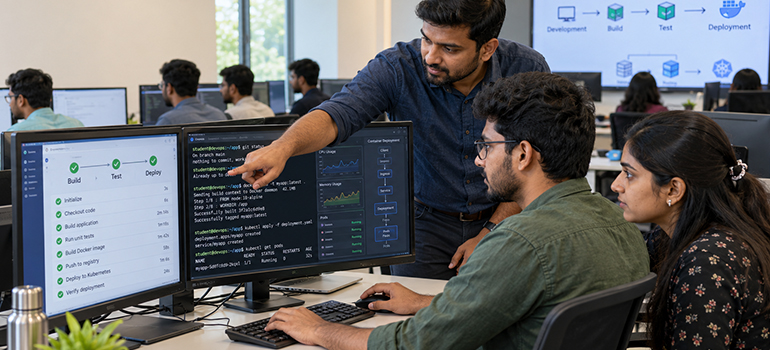
DevOps Classes and Training in Ahmedabad can help you develop skills for several technical career paths. However, your suitable starting role depends on practical experience, technical knowledge, and project work. Employers evaluate how you solve problems and explain your decisions during interviews. Before choosing training, discuss your career goals and learning needs with HighSky IT Solutions. Understanding different roles helps you build relevant skills and prepare stronger applications.
Which Job Roles Match Your DevOps Skills?
DevOps training can help applicants for junior engineering, automation, infrastructure, and technical support employment. Furthermore, companies often use different titles for jobs with similar daily responsibilities. Read each job description carefully before deciding whether your skills match expectations. Some positions welcome beginners, while others require previous development or systems experience. Completing training supports your preparation, but employers make hiring decisions using several factors.
What Does a Junior DevOps Engineer Do?
A junior DevOps engineer helps teams improve software delivery and maintain development environments. Additionally, this role often involves supporting pipelines, checking deployments, and investigating routine technical issues. You may work with developers and operations teams to resolve configuration problems. Employers may expect basic Linux knowledge, scripting ability, and familiarity with version control. Practical projects help you explain these skills clearly during entry-level job interviews.
Which Skills Should You Practise for This Role?
Start by practising Linux commands, Git workflows, simple scripts, and basic networking concepts. Additionally, discover how a small application transitions from development to a functional setting. Build a project that includes testing, deployment steps, and clear setup instructions. Use DevOps Classes and Training in Ahmedabad to strengthen these connected technical skills. Ask HighSky IT Solutions how its syllabus addresses the responsibilities you want to pursue.
Can You Apply for Build and Release Roles?
Build and release engineers help teams package software and coordinate its delivery. Furthermore, they manage build processes, track software versions, and investigate failed release steps. These responsibilities require careful communication because several teams may contribute to one release. Beginners can explore junior release or build support positions when requirements match. Demonstrating a repeatable build process can help you explain your understanding during interviews.
What Does a CI/CD Support Engineer Handle?
Continuous integration and continuous delivery pipelines automate checks and prepare software for release. Engineers who support these pipelines also keep dependable workflow steps and look into failed jobs. You may configure tests, manage build outputs, or document how teams handle failures. Roles in cloud operations include upkeep of cloud resources and application support in certain settings. A sample pipeline with useful error messages provides practical evidence of your learning.
Can DevOps Training Support Cloud Operations Applications?
Roles in cloud operations include upkeep of cloud resources and application support in certain settings. Moreover, daily work may include checking resource usage, reviewing alerts, and investigating access problems. Employers may ask for networking fundamentals, operating system knowledge, and basic security awareness. A Devops Online Course in Ahmedabad can support preparation when its syllabus covers these areas. Check individual job requirements because some cloud positions require additional experience or specialised knowledge.
How Can You Demonstrate Cloud Operations Skills?
Create a small practice environment and document how its main components connect. Furthermore, explain access permissions, monitoring choices, and the steps you follow during failures. Practise identifying unnecessary resources and shutting them down after completing your exercises. Ask HighSky IT Solutions whether relevant assignments include resource management and troubleshooting. Rather than just listing platform names, these exercises assist you in describing your choices.
What Does an Infrastructure Automation Engineer Do?
Code is used by infrastructure automation engineers to develop and oversee repeatable technical settings. Additionally, they reduce manual setup work by defining resources and configuration requirements clearly. This role can involve reusable templates, configuration checks, and controlled environment updates. Many employers expect practical infrastructure knowledge alongside scripting and version control skills. Beginners should consider junior automation opportunities that match their existing knowledge and project experience.
Can You Move Towards Site Reliability Engineering?
Site reliability engineers help teams maintain dependable services through monitoring, automation, and incident response. Additionally, they look into persistent errors and create enhancements that lessen operational issues in the future. Strong troubleshooting abilities and prior application management knowledge are frequently needed for these roles. Beginners may first gain relevant experience through operations, support, or junior DevOps positions. Training can introduce reliability concepts, while practical responsibility helps develop deeper professional judgement.
Is Technical Support a Useful Starting Point?
Beginners can learn troubleshooting techniques and comprehend program behavior by working in technical support roles. Moreover, some roles involve investigating logs, checking services, and communicating problems to engineering teams. Seek jobs involving Linux, cloud environments, deployment support, or monitoring duties. These duties can build experience relevant to future DevOps engineering applications. However, review the actual responsibilities because support roles vary considerably between different employers.
What About Container and Platform Engineering Roles?
Container support roles involve packaging applications and investigating problems within container environments. Additionally, platform engineers create shared tools and workflows that help development teams deliver software. Platform engineering often requires broader experience with infrastructure, automation, security, and developer needs. Beginners can build foundations through smaller container projects and junior infrastructure responsibilities. Treat these roles as possible career directions while checking each employer’s experience expectations.
How Should You Prepare Before Applying?
A Practical DevOps Job Application Checklist
Choose one target role before building projects or rewriting your professional resume. Furthermore, compare several job descriptions to identify skills employers repeatedly request for similar positions. Use DevOps Classes and Training in Ahmedabad to address gaps through focused practice. Discuss relevant learning priorities with HighSky IT Solutions before selecting your training path. Clear evidence of your work helps employers understand what you can actually contribute.
- Build one working project that connects version control, testing, and deployment.
- Explain your troubleshooting steps clearly and describe how you verified each solution.
- Keep project instructions clear so another person can repeat your setup.
- Practice scripting, networking fundamentals, and Linux commands with little everyday tasks.
- Match your resume to responsibilities that you can demonstrate during interviews.
- Apply for suitable junior positions while continuing practical learning and project improvements.
Build Skills That Support Your Next Career Step
DevOps offers several career directions, including software delivery, cloud operations, automation, and reliability. Therefore, select opportunities that match your current abilities and longer-term professional interests. When considering a Devops Online Course in Ahmedabad, review practical assignments and prerequisite knowledge. Talk to HighSky IT Solutions about your objectives and ask for detailed syllabus material. Consistent practice, useful projects, and realistic applications can strengthen your preparation for technical interviews.
FAQs
Discuss junior DevOps, build support, cloud operations, and automation roles with HighSky IT Solutions, then compare employer requirements.
Ask HighSky IT Solutions about prerequisites, foundation lessons, practical exercises, and preparation suitable for your current technical knowledge.
Ask HighSky IT Solutions how online lessons develop practical skills, project experience, and troubleshooting abilities relevant to your target role.
Junior engineers support pipelines, deployments, and troubleshooting; ask HighSky IT Solutions how course projects introduce these common responsibilities.
Review cloud job requirements, then ask HighSky IT Solutions whether relevant lessons cover networking, access management, monitoring, and troubleshooting.
Scripting supports many DevOps tasks; ask HighSky IT Solutions which programming foundations you should understand before joining your chosen course.
Many reliability roles require operational experience; ask HighSky IT Solutions about foundations supporting junior roles and future reliability responsibilities.
Ask HighSky IT Solutions about projects combining version control, automated testing, deployment, monitoring, and clearly documented troubleshooting steps.
Training cannot guarantee employment; ask HighSky IT Solutions to explain career assistance, while employers assess your skills and suitability.
Compare prerequisites, practical access, trainer feedback, and project requirements; request these details from HighSky IT Solutions before enrolling.